You might have heard it before: The Azores, and maybe even Madeira, are to Europe what Hawai’i is to North America. Warm, surrounded by water, and riddled with more tourists, complex histories, and unique biodiversity than most visitors realize. Many people also don’t realize there is another set of islands with unique parallels to Hawai’i…The Canary Islands.
Politically part of Spain, the Canaries are notably overlooked by Eastern-based North American travellers (less so by the savvy Europeans). At least, THIS very Eastern-based traveller overlooked them for years. Before my venture to Tenerife, my awareness of the Canaries was a passing reference in the Harry Potter films, and the misconception that the islands were named for canary birds. (Spoiler: the name originates from the Latin word for dog). Despite my previous woeful knowledge of the Canaries, my Hawaiian experience is extensive. Once on the Canarian island of Tenerife, I was struck by the similarities to Hawai’i, and O’ahu in particular.
Without further ado, here are ten reasons why Tenerife is the O’ahu of Europe:
- 8 Major Islands, 1 Major Destination
Both island chains claim eight main islands. Although Hawai’i comprises over 100 islands in total, only eight are usually seen on maps. The Canary Island chain is smaller but tourists can visit all eight islands, setting it apart from Hawai’i. Tenerife and O’ahu are the most visited islands in their respective chains, and also the most populated.
Pro-tip: For smaller crowds, avoid travelling to Tenerife in July and August, and during popular holidays.
- Different Island Vibes
As no two things are the same, no two islands are the same. Islands in both archipelagos are known for different characteristics, often with nicknames or slogans connected to them. For example, La Gomera in the Canaries is more akin to Kauai with its less frequented forests, hiking trails, and beaches. O’ahu is nicknamed “The Gathering Place,” in Hawai’i, and the same can be said about Tenerife. With similar populations and offerings including nightlife, water parks, zoos and aquariums, hiking, and beaches.
Pro-tip: Don’t limit yourself to only one island. Visit multiple for a fuller experience.
- Climate
With a latitudinal degree difference of only 7 between Tenerife and O’ahu, the climates are mild year round. Tenerife is located at 28.29° N, while O’ahu sits at 21.43° N. Annual low temperatures on Tenerife can reach 60 degrees Fahrenheit, with highs around 85° F. O’ahu annual lows are almost identical. Rainfall is the significant difference between the two islands, with Tenerife claiming barely 20 rain days per year. In contrast, O’ahu averages 47 rain days annually.
Average ocean temperatures are also comparable but Tenerife waters are cooler than O’ahu’s. Tenerife water temperatures are between 68-76° F, while O’ahu’s are 74-80° F. Despite being part of Spain, the Canaries are over 800 miles from the Spanish mainland yet only 60-ish miles from the African coast, attributing to the warm, dry weather.
Pro-Tip: Both island groups have high elevation anomalies, so it’s best to bring layers if you want to see the islands top to bottom.
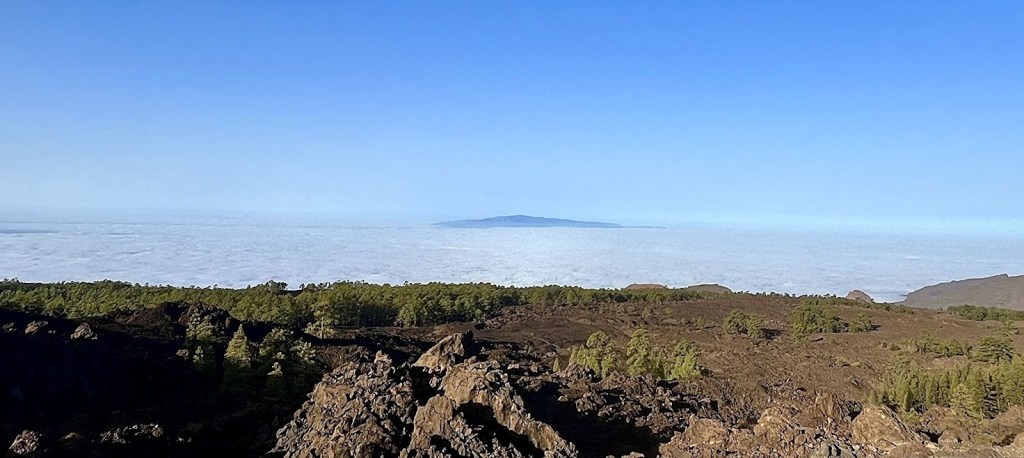
High elevation areas on Tenerife reach above the cloud line. (Emily Louina Cook)
- Erased Culture
Colonialism is no stranger to either island group. Europeans unleashed their ways in the Canaries first, simply due to the proximity to the continent and its favorable winds for sailing. The early 1400’s saw the first conquering of a Canary island. Tenerife would be the last to fall in the late 1400’s. The original inhabitants, the Gaunches, had their culture erased through slavery, oppositional forces with advanced warfare, and disease. European colonization of Hawai’i didn’t begin until the late 1700’s. Although more Hawaiian people and culture survived and are now celebrated, it was not without atrocities and illegalities.
It always seems insufficient to not elaborate more on these colonial histories. However, that is not the point of this article. In short, while on Tenerife, culturally sensitive travellers will have to look hard to find remnants of Gaunche society. As on O’ahu, visitors must search through the glitz-ified tourist traps to find authentic Hawaiian culture.
Pro-tip: Visit Museo Guanche on Tenerife and Iolani Palace on O’ahu.
- UNESCO Recognized Biodiversity
The Canary Islands have multiple UNESCO (United Nations Educational, Scientific and Cultural Organization) sites. Tenerife has two UNESCO World Heritage Sites and a UNESCO Biosphere Reserve. The Hawaiian islands have two UNESCO sites, none of which are on O’ahu (although the author believes that there are deserving locations on the island).
Teide National Park is a UNESCO site that claims the highest point in Spain, thanks to the Teide Volcano (this is where to expect cold, elevational temperatures). It also ranks amongst the world’s tallest volcanoes, depending on how you measure it, at 12,198 feet (3,718 meters). Teide’s geologic formations add a bold aura to hikes, photos, and even rock climbing.
San Cristóbal de La Laguna, often shortened to simply La Laguna, makes the UNESCO list as an important historical and cultural city. The first capital city of the Canary Islands contains harmonious architecture and preserved historical buildings of all genres. Considered the first unfortified town using a grid, La Laguna influenced settlements in the Americas.
Anaga Rural Park UNESCO Biosphere Reserve is significant for its laurel forests and high concentration of endemic species. Although the majority of endemics here are invertebrates, birders and plant aficionados will have plenty to appreciate. Ebird reports a total of 45 different bird species have been sighted within Anaga, and the vibrant flowers of the critically endangered and endemic Lotus maculatus will light up your nature walk.
Pro-tip: binoculars are great for viewing cliff-dwelling plants in addition to birds.
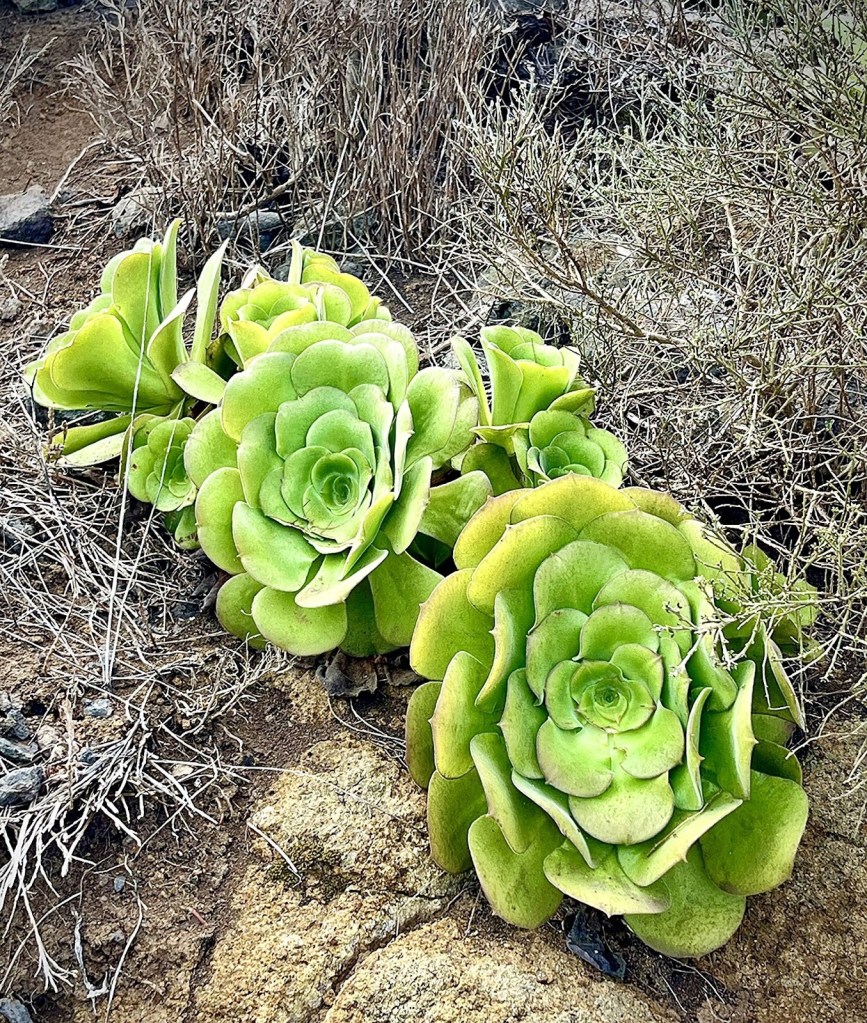
The Canary Aeonium (Aeonium canariense) is endemic to Tenerife and can be found up to 4,200 feet above sea level, including on rocky cliffs. (Emily Louina Cook)
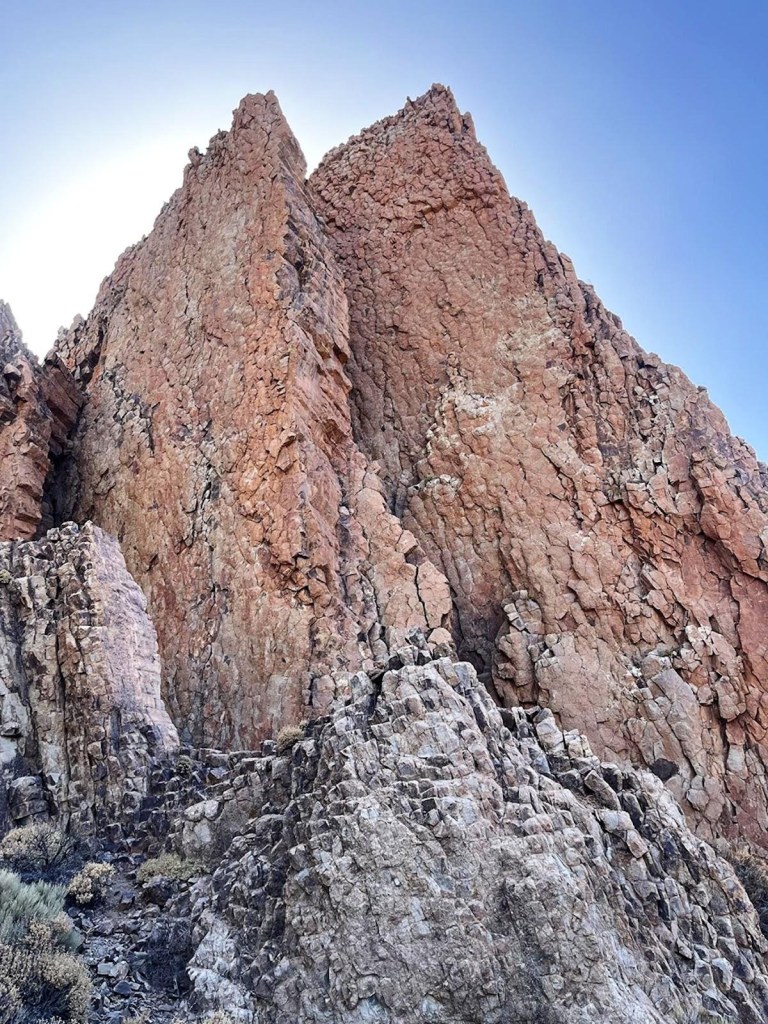
One of the impressive geologic formations of Teide National Park. (Emily Louina Cook)
- Water Activities
It’s difficult to imagine a Hawaiian vacation without water activities, and the Canaries should be imagined similarly. All the usual suspects of water play are offered here: swimming, snorkelling, surfing, SCUBA diving, kayaking, stand up paddle boarding, windsurfing, parasailing, cruises, waterparks, pools, submarine tours, fishing charters…and that’s just scratching the surface. I was personally impressed with the water clarity and colorful marine life while diving.
Besides the sheer variety of water activities, Tenerife is known for multiple protected beach coves and lifeguard coverage. This makes beach day safe and relaxing for the whole family. Additionally, Tenerife has 12 beaches that were awarded the Blue Flag status, indicating high environmental standards and safety measures.
Tenerife’s Siam Water Park is routinely rated the World’s best waterpark. A destination in itself, the park offers attractions for all abilities under a Thailand theme. Private cabanas with champagne service, a lazy river, wave pools, slides, sea lions, and a floating market await to be enjoyed. O’ahu is the only Hawaiian island with a water park, further linking these islands in similarities.
Pro-tip: If SCUBA diving, bring your own supplies in case of stings from rogue jellyfish tentacles. Trying to explain this scenario in a pharmacy on a Sunday through a language barrier is best avoided.
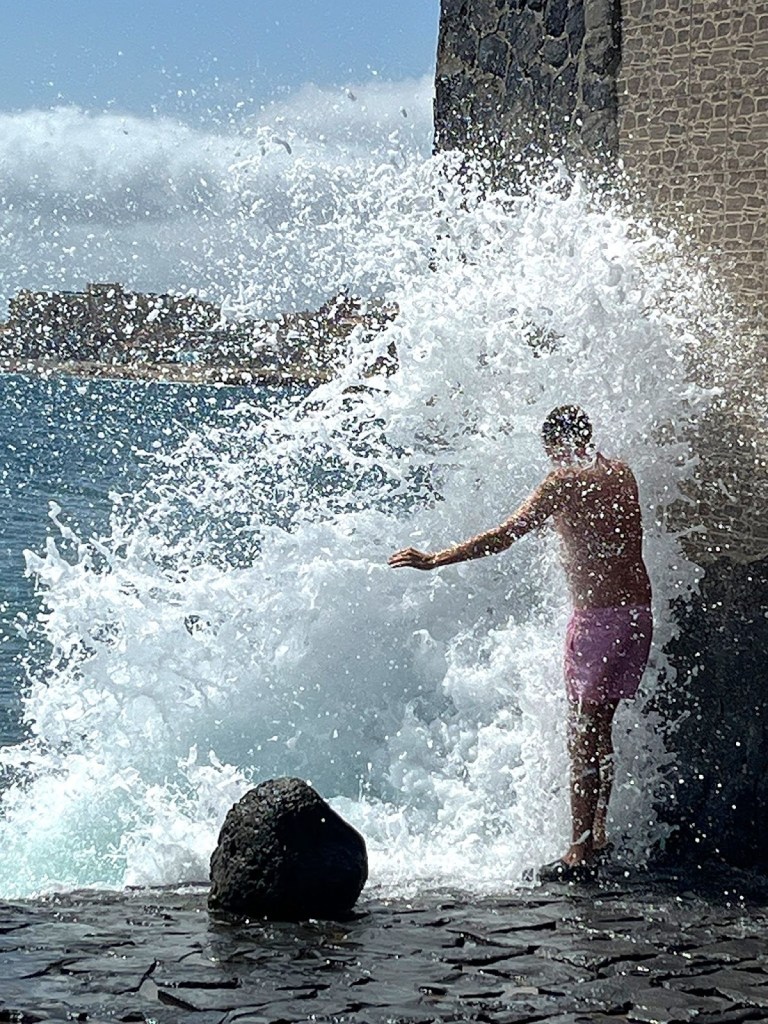
Even strolling the sidewalk can be a water activity in Tenerife (Emily Louina Cook)
- Volcanos
One of the most iconic features of Hawai’i is volcanoes, and Tenerife serves up this hot commodity as well. Like Hawai’i, the Canaries were formed by volcanoes millions of years ago. So if you make it to either archipelago, be sure to raise a glass to the respective volcanic deities.
On Tenerife, Teide Volcano is active, though dormant, as it last erupted in 1909. Tourists can enjoy this geographical giant through hiking, cable tours, and scenic drives. Even with a packed daytime schedule, stargazing from Teide offers exceptionally clear skies. Similarly on Hawai’i, tours and viewing abound on active, dormant, and extinct volcanoes.
One little word that solidified the Hawaiian-Canarian volcanic connection for me…’A’ā. Pronounced like you’re stepping on something hot and uncomfortable, the term is used in Hawai’i and the Canaries for lava flows with rough “clinkery” surfaces, usually shaped in smaller clusters. My Spanish guide knew more English than I knew Spanish but, when I stepped out at a Teide photo stop and instinctively said, “’A’ā,” we were delighted to speak the same language. Western volcanists (volcano scientists) adopted multiple Hawaiian words in the late 1800’s to describe lava, and the naming system is now used worldwide.
Pro-tip: Bring closed toed shoes. Sneakers with significant grip or hiking boots are ideal, depending on your athletic ambitions. Smaller A’ā bits and dust will find every possible way to get inside hiking sandals, and you’ll spend more time adjusting your footwear than enjoying the moment.
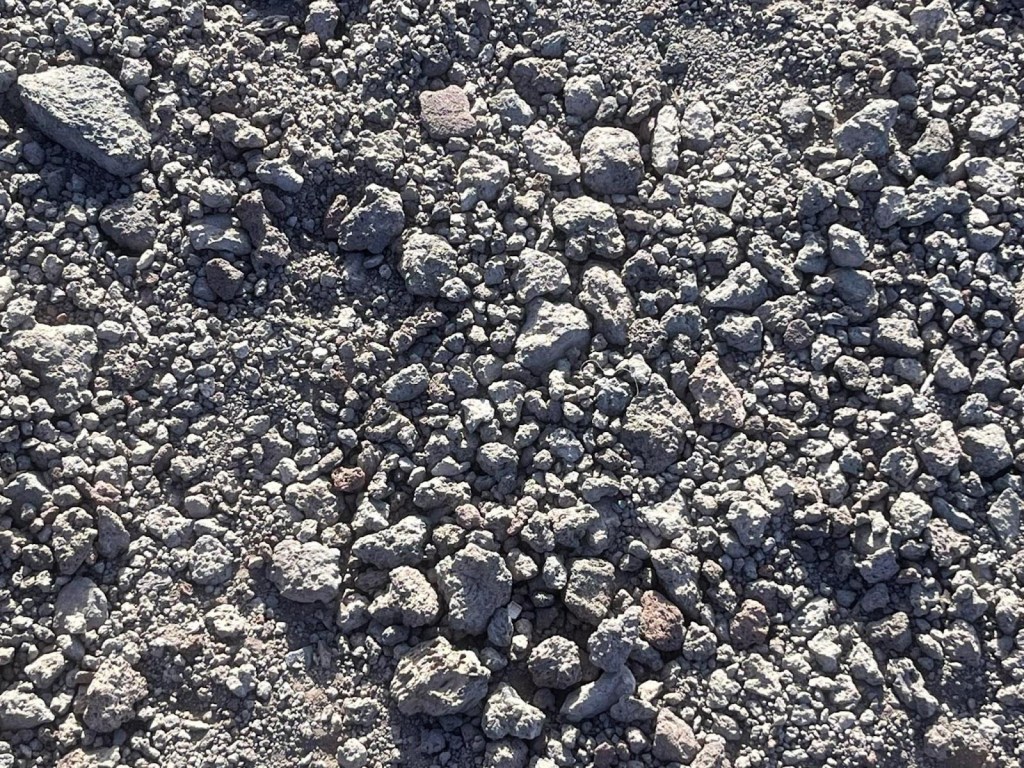
Photo: ‘A’ā inside Teide National Park. (Emily Louina Cook)
- Hiking Activities
A classic vision for island goers is a lush hike to a waterfall. Although Hawaii’s annual precipitation caters to this exceptionally well, the Canary islands deliver on this front too (with the bonus of not hiking in the rain). From the challenging yet rewarding Barranco del Infierno trail, to the tame and maintained paths of Taoro Park, vegetated waterfall excursions await. Other hiking terrains are available, including winding paths with exceptional views, rocky climbs, and trails beginning and ending near quaint restaurants.
Pro-tip: Bring layers, sun protection, more hydration that you think you’ll need, and plan to book far in advance for Barranco del Infierno.
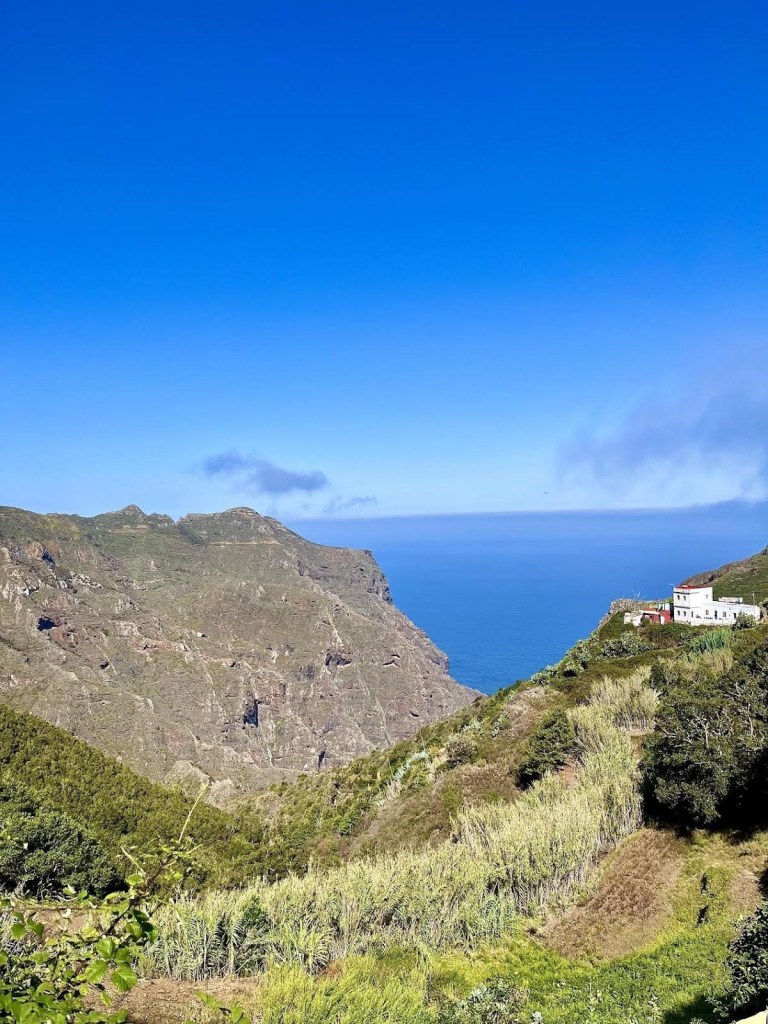
Hiking in Teno Rural Park provides striking vistas and village charm. (Emily Louina Cook)
- Food
Musubi, seafood, and pineapples probably come to mind as the culinary emblems of Hawai’i, and of course, a tropical drink. Seafood in Tenerife is also exceptional, along with papas arrugadas and bananas as the gastronomic stars. Papas arrugadas a.k.a. wrinkled potatoes are made by boiling spuds in generously salted water, then allowing them to dry on the stovetop. This simple dish is traditionally served with mojo rojo to spice it up. Multiple banana plantations thrive on Tenerife, with guided tours available.
Ah, but what about the tropical drink? In the Canaries, the barraquito is the king of cocktails. Originally crafted on Tenerife, it is made with coffee, Liquor 43, condensed milk, cinnamon and citrus peel. The resulting warm layers and combination of earthy and tropical flavors make this beverage the epitome of a tropical European destination.
Throughout the island Spanish and other European influences can be seen (and tasted) in your dining. Spanish wine is pervasive with varieties catering to many palates. Sangria is the perfect alternative for those who recoil at the coffee component of barraquitos.
Pro-tip: Try something new even if you think you won’t like it, and be prepared for LATE dinner times. Although you’re closer to Africa, Tenerife runs on European-Island-Time.
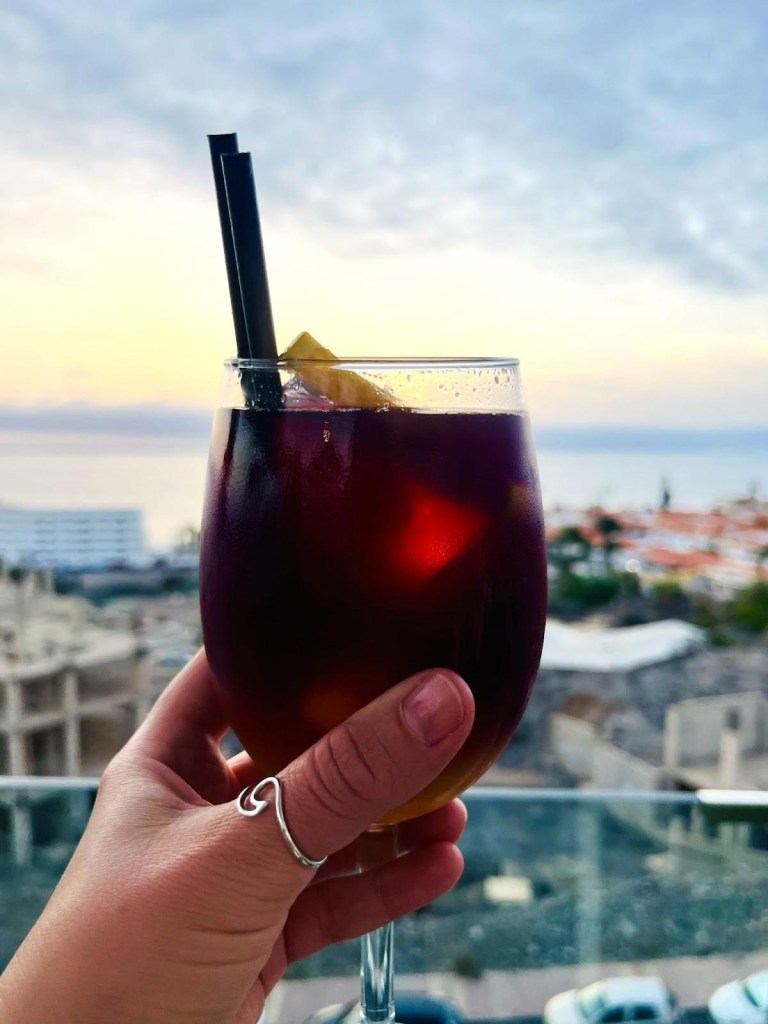
Sangria with a sky-high sea view. (Emily Louina Cook)
- Professional Sports
Hawai’i is known for professional surfing and an Ironman triathlon. While Tenerife also hosts notable surfing competitions and triathlons, the island is most known for the professional cycling and windsurfing scene. Participants and spectators alike will enjoy world-class events while basking in the constant Canarian sun.
The windsurfing hotspot on Tenerife is El Médano, which hosts the Professional Windsurfing Association (PWA) World Cup. Although top athletes frequent these waters, beginners can take windsurfing or kiteboarding lessons at establishments along the beach. Multiple restaurants and watering holes with outside seating make spectating a luxury.
Tenerife became a mecca for cycling due to the accommodating climate and varied routes with altitude potential. Altitude training is not only fun and challenging, it gives professional athletes an edge in their performance. Cyclists can create their own adventures thanks to accessible detailed route maps, or book a guided trip with options from leisurely e-bike tours to intense training camps. Tenerifevelo is unique in that individuals can join scheduled training camps, or existing clubs or groups can coordinate training or holiday stays. Tenerifevelo accommodations make it superb for group options.
Pro-tip: Check the schedules for events on Tenerife. Sports enthusiasts will want to catch some of the action, while others may want to avoid the crowds and road complications.
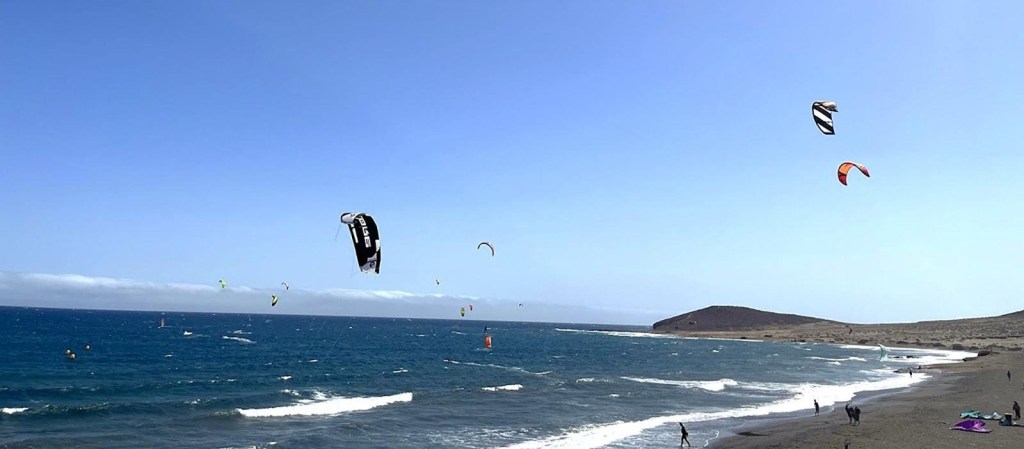
Kiteboarders and windsurfers in Tenerife. (Emily Louina Cook)
In conclusion, the Canary Islands are rightly considered to be the Hawai’i of Europe. Although both island groups have their unique distinctions, it is human nature to see similarities in our experiences. Tenerife is the O’ahu of Europe…at least until I explore another island that fits the claim.
If you find yourself needing to choose between a Hawaiian vacation and a European vacation, you have a good problem. Lava or cobblestoned cafes? Endemic flora and fauna or famous art? Mountain treks or seaside strolls? Island vibes or posh excursions? The Canary Islands offer an enticing two-for-one special of a tropical island AND a European vacation. Now, you can be a smart muggle too and choose Tenerife.
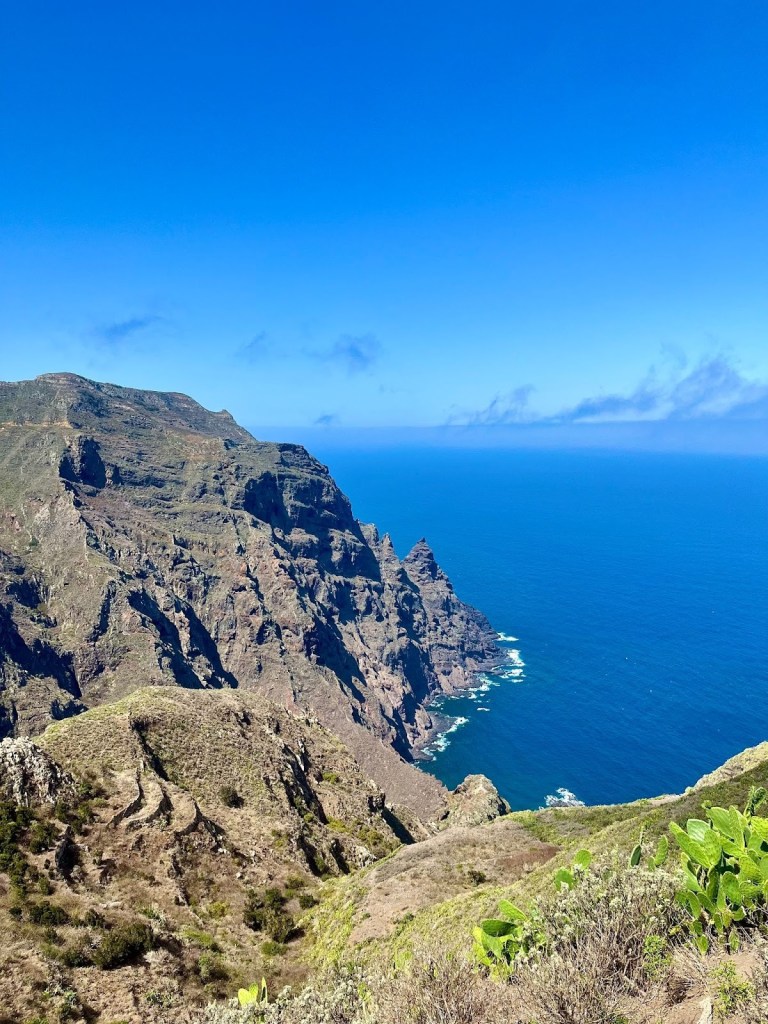
Cliffs in Teno Rural Park reminiscent of iconic Hawaiian cliffs. (Emily Louina Cook)
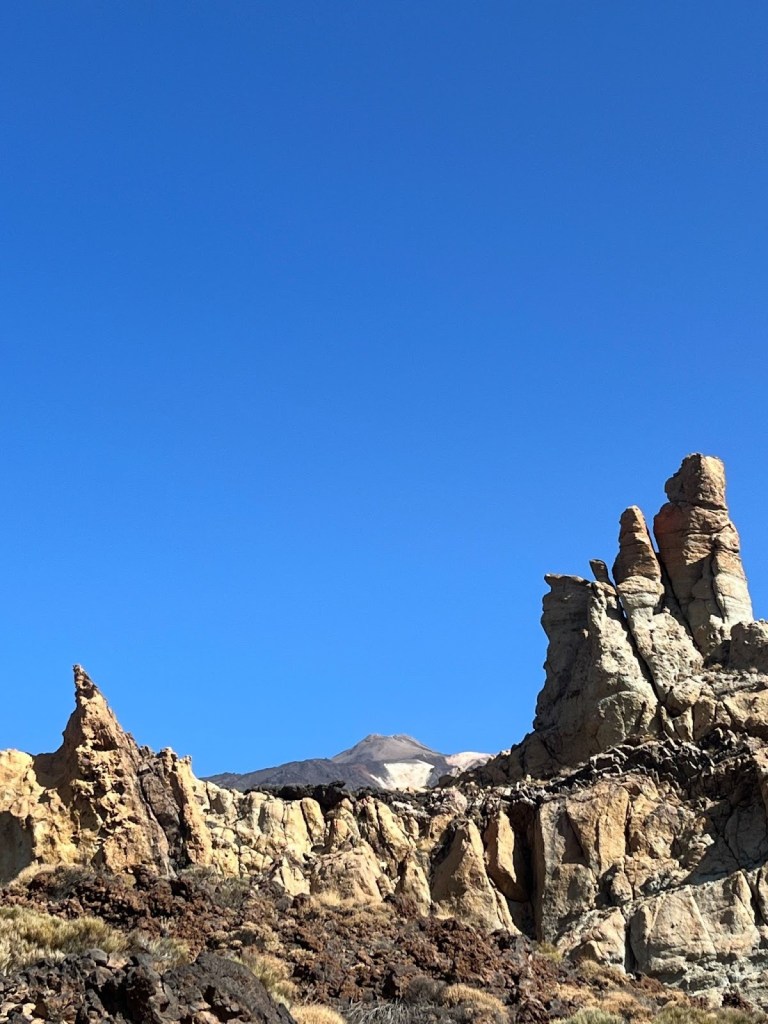
Teide National Park. (Emily Louina Cook)
 EmilyLouina.com